

How to Craft a UVP So Clear, Customers Feel Dumb Saying No 🎯
$47,000 in ads. 200 clicks. 3 sales.
The landing page looked beautiful. The product solved a real problem. But visitors bounced in 8 seconds flat—confused, unconvinced, gone.
The diagnosis? Not a traffic problem. Not a pricing problem. A value clarity problem.
Your Unique Value Proposition (UVP) isn’t marketing fluff. It’s the 3-second filter that separates “take my money” from “back button.” Get it wrong, and you’re invisible. Get it right, and competitors become irrelevant.
Today you’ll learn the pain-first framework that transforms vague features into positioning so sharp, customers feel relieved they found you.
🧠 What a Unique Value Proposition Actually Is (And Isn’t)
A UVP is NOT:
- A catchy slogan (“Innovation for tomorrow!”)
- A feature list (“AI-powered dashboard!”)
- A mission statement (“We empower businesses!”)
A UVP IS: A specific promise that answers: “Why should I choose YOU instead of doing nothing, doing it myself, or hiring your competitor-right now?”
It contains four non-negotiable elements:
- Who it’s for (not “everyone”)
- What pain it eliminates
- How it transforms their situation
- Why you’re the only logical choice
Miss one, and you’re competing on price. Nail all four, and you own a category.

❌ Why 90% of Value Propositions Fail (The Feature Trap)
The corporate graveyard is full of UVPs like:
- “All-in-one solution” (Vague. All-in-one what?)
- “High-quality service” (Expected. Not a differentiator.)
- “Innovative platform” (Meaningless buzzword.)
- “Best results guaranteed” (Skepticism trigger. Prove it.)
The fatal flaw: They describe features, not relief.
Customers don’t wake up wanting “innovation.” They wake up wanting their specific nightmare to end.

🔥 The Pain-First UVP Framework (Steal This)
Step 1: Identify the Exact Human (Not a Demographic)
Weak: “Small business owners”
Strong: “SaaS founders who just raised Series A and need predictable pipeline in 90 days”
The test: Can you name 10 real people who fit this description? If not, keep narrowing.
Questions to sharpen:
- What stage of business/life are they in?
- What have they already tried that failed?
- What expensive problem keeps them awake?

Step 2: Name the Pain So Specifically They Nod
Weak: “They struggle with marketing”
Strong: “They’re bleeding $8K/month on agencies that report vanity metrics while pipeline stays empty”
Pain categories that convert:
- Time pain: “Wasting 15 hours/week on manual reports”
- Money pain: “Paying for 3 tools that don’t talk to each other”
- Status pain: “Looking amateur to clients/prospects”
- Risk pain: “One bad hire away from cash flow crisis”
The litmus test: If they read your pain description and think “How did they get inside my head?”—you’ve nailed it.

Step 3: Show Transformation, Not Features
Don’t say: “Automated reporting dashboard”
Say: “See exactly which campaigns print money—in 30 seconds, zero spreadsheets”
The formula: [Before state] → [After state] = Transformation
Examples:
- “From ‘Where did my budget go?’ → ‘Every dollar accounted for, every ROI visible'”
- “From ‘Hiring takes 6 weeks’ → ‘Top candidates screened in 48 hours'”
- “From ‘Churn keeps me awake’ → ‘Predict alerts 30 days before customers leave'”

Step 4: The “Only” Differentiator (Your Competitive Moat)
Weak differentiator: “We have better customer service” (Everyone says this)
Strong differentiator: “We’re the only CRM that refunds 100% if setup takes longer than 24 hours”
Differentiator categories:Table
Copy
| Type | Example |
|---|---|
| Speed | “Same-day delivery vs industry standard 5 days” |
| Risk reversal | “Pay only after you see results” |
| Specificity | “Built exclusively for dental practices” |
| Process | “Proven 47-step system, not guesswork” |
| Access | “Direct Slack channel to your strategist, not tickets” |
The test: If your competitor could copy-paste your UVP, it’s not unique enough. Add constraint, specificity, or guarantee until they can’t.
💡 Real UVP Breakdowns (Before → After)
Example 1: Project Management Tool
Before: “Powerful platform for team collaboration” (Yawn)
After: “Ship projects 3× faster without adding headcount—guaranteed onboarding in 60 minutes or we work free”
Pain: Slow delivery, hiring pressure
Transformation: Speed without expansion
Differentiator: Onboarding guarantee + time constraint
Example 2: Financial Advisory
Before: “Comprehensive wealth management services” (Generic)
After: “Retire 5 years earlier by fixing the 3 tax leaks most CPAs miss—built for tech employees with equity comp”
Pain: Overpaying taxes, delayed retirement
Transformation: Earlier financial freedom
Differentiator: Specific expertise (equity comp) + quantified outcome
Example 3: Marketing Agency
Before: “Full-service digital marketing” (Invisible)
After: “Predictable B2B pipeline in 90 days—no retainers, no vanity metrics, pause anytime”
Pain: Unpredictable results, locked contracts, meaningless reports
Transformation: Controllable growth
Differentiator: Risk reversal (no retainer/pause) + specific timeline
📍 Where Your UVP Must Live (Consistency = Trust)
Your UVP isn’t a homepage headline—it’s a north star that guides every touchpoint
Copy
| Location | UVP Application |
|---|---|
| Website hero | Full UVP in 10 words or less |
| Meta ads | Pain-first hook + transformation |
| LinkedIn bio | Who you help + outcome |
| Sales calls | Opening statement before pitch |
| Email subject lines | Pain point or specific outcome |
| Pricing page | Risk reversal near “Buy” button |
| Onboarding | Reinforce the promise they bought |
Inconsistency kills trust. If your ad promises speed but your onboarding takes weeks, your UVP becomes a lie.

🚫 The “Everything to Everyone” Death Spiral
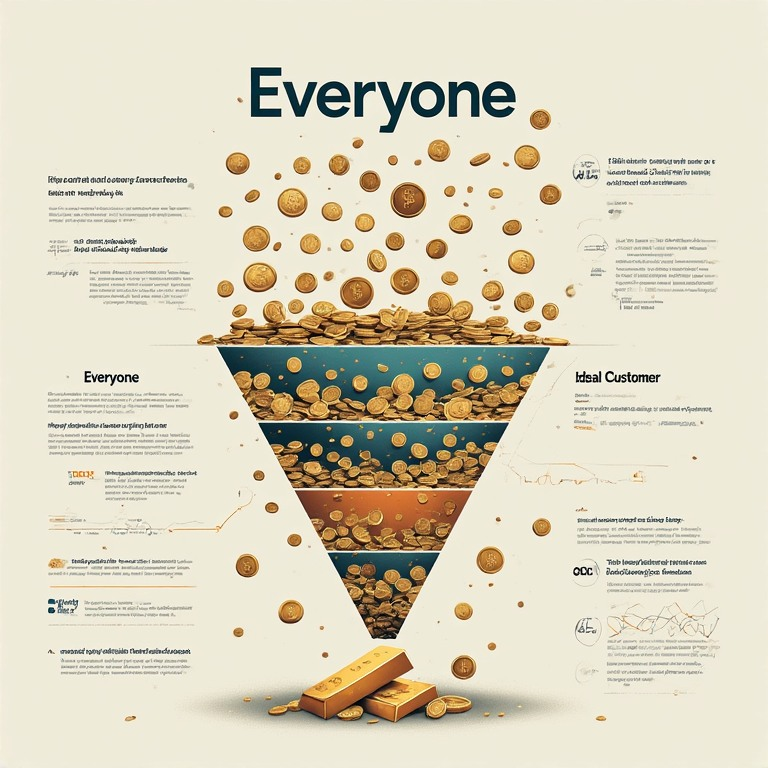
The fear: “If I narrow my UVP, I’ll lose customers!”
The reality: Vague UVPs attract no one. Specific UVPs attract ideal customers who pay more, stay longer, and refer friends.
Narrowing checklist:
- Can you name 50 real people who fit your “Who”?
- Does your “Pain” make them say “That’s exactly my situation”?
- Is your “Differentiator” provable in 60 seconds?
If yes to all three, you’ve found your wedge. Own it.
🎯 The 60-Second UVP Stress Test
Before you ship anything, answer these fast:
- Who exactly is this for? (Name 3 real people)
- What pain do they feel right now? (Use their words)
- What changes after they use this? (Before/after)
- Why can’t competitors say this? (Specific constraint/guarantee)
Score: 4/4 = Launch. 3/4 = Revise. 2/4 or below = Start over.
🧭 Final Thought: Clarity Is the Real Moat
In markets drowning with options, the clearest communicator wins—not the best product, not the cheapest price.
Your UVP is a filter that repels wrong-fit customers (saving you support headaches) and magnetizes right-fit customers (who pay premium, stay loyal, and sell for you).
If a prospect can’t repeat your UVP after one conversation, you don’t have one yet. Keep refining until it’s unforgettable.

🚀 Your 48-Hour UVP Sprint
Day 1 Morning: Interview 5 customers (SMS: “What almost stopped you from buying?”)
Day 1 Afternoon: Map their exact words to Pain → Transformation → Differentiator
Day 2 Morning: Write 3 UVPs using the 4-part framework
Day 2 Afternoon: Test with 3 prospects; keep the one they repeat back to you
Launch Monday. Watch conversions climb before Friday.
And discover how marketing strategy and storytelling can drive real results for your business!